
Last Updated on May 9, 2026 by Saria
How to Find Remote Jobs for Caribbean Nationals in 2026
If you’ve been searching for remote jobs for Caribbean nationals, you already know the struggle.
You find a job that looks perfect… Then you see “US only.”
It doesn’t matter if you’re in the Bahamas, Jamaica, St. Lucia, Barbados, Trinidad, or anywhere in between and are fully qualified. You’re out.
I’ve been there. It’s frustrating.
And honestly, it can make you feel like remote work just isn’t made for us.
But worldwide remote jobs for Caribbean people are possible. You just need to know where to look and what to look out for.
After getting laid off from my banking job back in 2015, I started researching online income.
I tested different paths, from running an Amazon FBA business to print-on-demand stores. And along the way, I also came across companies and platforms that not only hired globally but also from the Caribbean. You just don’t hear about them enough.
So, in this post, I’m going to show you legitimate international remote jobs for Caribbean nationals and the platforms you can sign up for. Additionally, I’ll explain how to identify online jobs for Caribbean nationals before you even apply.
But before we explore the job search process, it’s important to understand the challenges Caribbean nationals may face. Once you understand why, the rest of this guide will make a lot more sense.
Table of Contents
Why Finding Remote Jobs for Caribbean Nationals Feels Hard
Here’s the thing. It’s not you.
People located outside the U.S., Canada, or Europe face challenges when searching for remote or work from home jobs.
And that’s usually because of 3 big factors:
- Location
- Platform limitations
- Payment barriers
Let’s dive into the factors that make finding a remote job challenging.
1. Location Restrictions
You finally see a job that says remote, and you begin to plan out your entire life.
Then you see “Must be based in the US.”
Wait…
If it’s remote, why does it matter if you’re in St. Lucia, Los Angeles, or the UK?
But here’s the reality.
Many companies can say “remote,” but they often mean remote within a specific country, region, or time zone.
And that’s usually because of taxes, laws, or internal policies, or it could even be because of where most of their customers are based (think about customer support roles).
Additionally, if your country or bank is facing sanctions or considered high risk, you won’t be able to apply. For example, some companies hiring globally specifically mention Cuba in their list of restricted countries.
So even if you qualify for a job, your location alone can disqualify you even before you apply.
Frustrating? Yes.
Note: Regarding online platforms, the use of VPNs (Virtual Private Networks) can be widely discouraged. Some platforms will explicitly state that you’ll be banned if you use a VPN. Additionally, you must be legally authorized to work in the country where you reside. So, please ensure you read the company’s FAQs, terms of service, or knowledge hub to ensure compliance.
So, location is the first filter. But even if you clear that hurdle, there’s another one waiting.
2. Platform limitations
Let’s say you were able to sign up on a freelance platform or job site.
You could still possibly hit another wall.
And depending on the platform, there could be many reasons for that.
For example, you could successfully register on AI job training platforms.
But you may not be matched with projects because sometimes the projects may require cultural knowledge (like the US) or workers from specific regions with local knowledge.
Or what about online survey sites? You may not receive surveys because most of the companies using those sites for market research are based in the bigger countries like the US, Canada, or the UK. And it can be assumed that they’d want feedback from people who reside in or are from these countries.
So, even though a platform may advertise they accept applicants worldwide, and you successfully create an account or register, work may be inconsistent, or you may not receive any at all.
And even if a platform does accept you and work is consistent, there’s still one more thing that can bring everything to a standstill.
3. Payment barriers
Now imagine you finally land a freelance job or an online gig.
So, the next question becomes “How will you get paid?”
And that’s where things may get complicated.
A company may only pay via a platform that isn’t supported in your country.
So, even if you’re qualified, getting paid can still be a problem.
We’ll break this down properly later, but know this: you may get stuck not because you can’t get hired but because you didn’t check how you’ll get paid first.
But here’s something that makes the search even harder, and it’s closer to home: work from home jobs in the Caribbean.
Why You Have to Look Outside the Caribbean for Remote Jobs
Some of the top countries with remote jobs include the US and Europe.
While some workers in these regions have worked remotely before the COVID pandemic, remote work or working from home exploded during COVID, and it has become the dominant trend.
But did Caribbean businesses respond favorably to working from home or remote work, or do they offer work from home, remote, or hybrid positions?
While there has been some flexibility ever since the pandemic, I think we can all agree that there isn’t a high number of Caribbean remote jobs provided by Caribbean companies or companies with a presence in the Caribbean as compared to office-only positions.
A review of some of the popular Caribbean job boards would show that most of the posted jobs are primarily for the office.
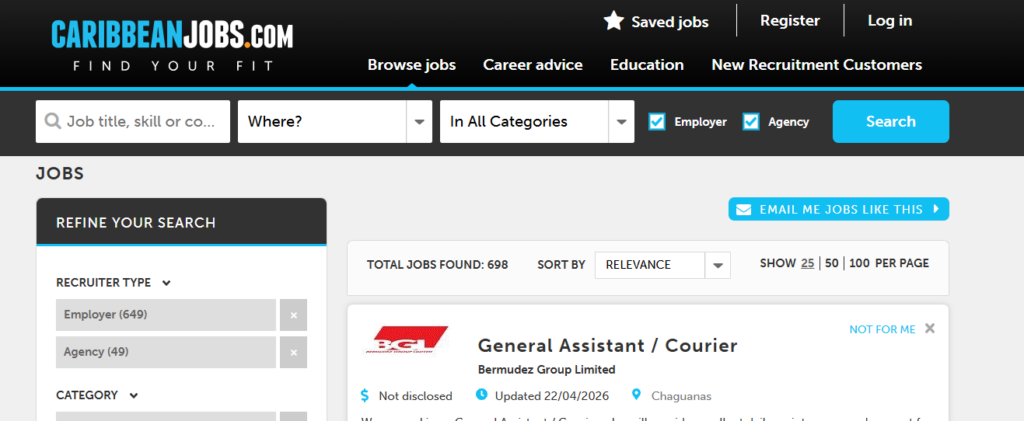
Here’s an example of the total number of jobs posted on a popular Caribbean job board. You’ll see 698 posted jobs.
And if you search using terms like “work from home” and “remote,” you’ll see that out of the 698 job postings, 33 were classified as “work from home,” which is about 4.7%, and 19 results contained “remote,” which is 2.7%.
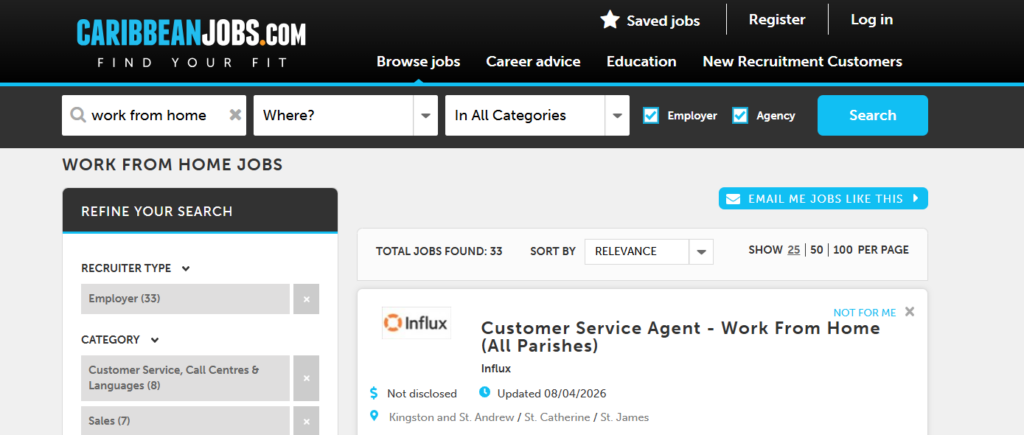
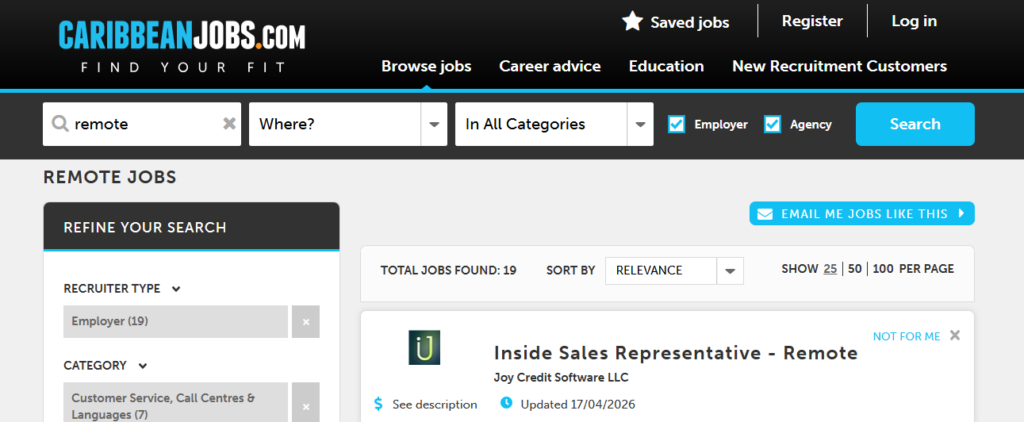
So, using this example, approximately 92% of jobs on this popular Caribbean job board were most likely office or non-work from home jobs.
Now, if we dig deeper, you’ll also realize that most of these work from home or remote jobs were posted for candidates in the bigger islands like Jamaica.
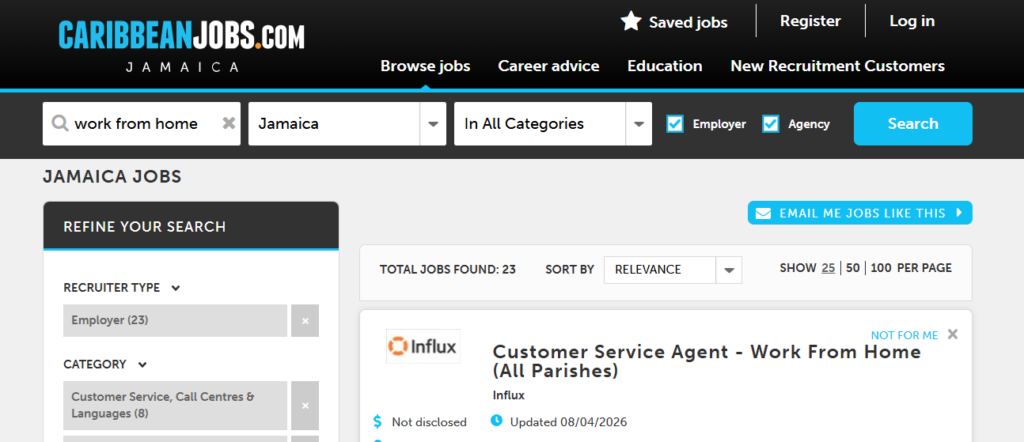
And let’s see what comes up when we search for work from home jobs in St. Lucia.
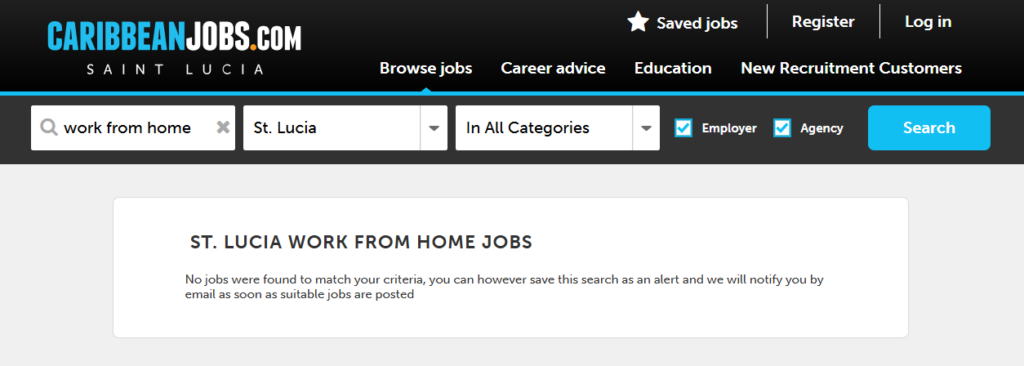
As you can see, using these examples, work from home or remote Caribbean jobs may not be plentiful compared to traditional job postings. But also, when they’re posted, the bigger islands like Jamaica seem to have more opportunities.
So, if you’re searching for Caribbean remote jobs from businesses in the Caribbean, you probably would hardly see any (depending on which island you’re from), which would force you to look outside the region if that’s the work style you prefer.
This doesn’t mean remote jobs aren’t out there; they absolutely are.
The real issue? You’ve probably been looking in the wrong places.
Most of the global platforms and job boards simply weren’t designed with Caribbean nationals in mind. And Caribbean job boards may not advertise many remote positions.
Once you understand the barriers and change your search strategy, everything becomes clearer, and more importantly, you’ll know what to avoid so that you don’t waste time and energy.
The Payment Problem (Read This Before Applying Anywhere)
Now that you know what you’re up against, let’s talk about the one thing people should check first.
How are you going to get paid?
You find the perfect opportunity. You get hired. You can do the work. Then you realize you can’t get your money properly.
Why this matters first
You don’t want to:
- Get excited about an opportunity
- Apply to a bunch of jobs or platforms
- Then check the payment methods
Because this could be a waste of your time and energy.
Some payout methods don’t work in the Caribbean, or some may not support your island at all.
Take Mercor, for instance, an AI job training platform that pays freelancers via Stripe Connect.
Here’s the thing. Not all Caribbean islands are supported by Stripe.
As of this post’s publish date, St. Lucia, Jamaica, and Trinidad are Stripe-supported countries. Barbados, Dominica, and Grenada aren’t. And Mercor is clear: if your country isn’t supported, don’t start work.
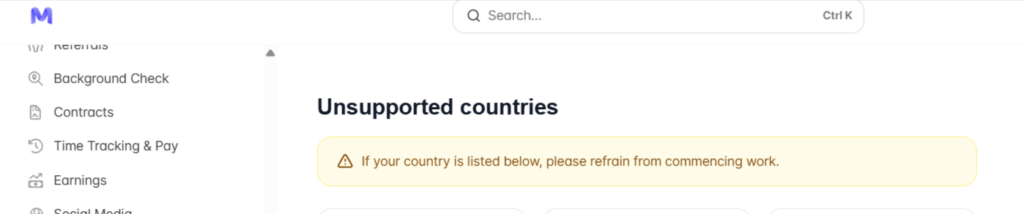
So, you could register, interview, even land a gig… only to find out you can’t get paid. That would be a painful experience.
(The good news? Stripe keeps expanding, so this may change.)
So, always research if a payment method works in your country before you apply or register on any platform.
Another reason you want to check the payout methods is that the payment platforms’ processing fees may be too high, and you could lose a chunk of your income.
So, change the way you look for remote jobs or online side hustles.
And one of the earliest checks is to figure out how they pay out first.
What to check before applying
If you’ve identified a job or a platform that may be open to worldwide or Caribbean applicants, before you apply or register on a platform, take some time to look for this:
1. How do they pay? (Is it PayPal, Stripe, Wise, Payoneer, bank transfer, or wire transfer, etc.?)
2. Is your country supported?
3. Are there high fees or currency conversions?
Most job advertisements for full-time or part-time work will not include this information. But to avoid wasting your time, you could reach out to their support or a company’s employee on LinkedIn if you want to be sure before applying.
In the case of online gigs (e.g., website testing, freelancing, teaching English online, etc.), the payout information can sometimes be seen in the FAQ section, the career page, or on their terms of service page. Contact their support if you can’t locate it.
You may want to think twice before applying for the position or platform if you find it difficult to obtain the information.
Quick solutions (keep it simple)
You don’t need to complicate things in order to start.
Just have at least one reliable way to receive international payments.
For example:
- Registering on an international payment platform
- Opening a bank account
The goal is to ensure that your money can reach you without stress, delays, or surprises.
Here’s a list of international payment platforms and the Caribbean islands they support.
| Platform | Countries They Support |
|---|---|
| Payoneer | Anguilla, Antigua & Barbuda, Aruba, Barbados, Bahamas, Bermuda, British Virgin Islands, Cayman Islands, Dominica, Dominican Republic, Grenada, Guadeloupe, Guyana, Haiti, Jamaica, Martinique, Montserrat, Netherland Antilles, Puerto Rico, St. Kitts & Nevis, St. Lucia, St. Vincent & the Grenadines, Trinidad & Tobago, Turks & Caicos Islands, Virgin Islands |
| PayPal | Anguilla, Antigua & Barbuda, Aruba, Bahamas, Barbados, Bermuda, Cayman Islands, Dominica, Dominican Republic, Grenada, Guadeloupe, Guyana, Jamaica, Martinique, Montserrat, Netherland Antilles, St. Kitts & Nevis, St. Lucia, St. Vincent & the Grenadines, Trinidad & Tobago, Turks & Caicos Islands |
| Stripe | Antigua and Barbuda, Bahamas, Dominican Republic, Guyana, Jamaica, St. Lucia, Trinidad & Tobago |
If a company hires from the Caribbean and they use any of these payout methods, once your island is supported, you know you can expect to get your earnings. So, always check the payout methods and know which countries they support before you apply.
Now you know how to avoid getting stuck at the payment stage; let’s look at the other thing that can waste your time: applying to jobs that aren’t going to accept you in the first place.
How to Identify Remote Jobs That Accept Caribbean Citizens
Okay, so now you may be asking, “How can I tell which jobs I can apply for?” Or “How can I identify remote jobs for Caribbean nationals?”
And these are great questions because many remote job listings look open to everyone, but they’re not.
Additionally, not all global or worldwide remote jobs are created equal, as you will read later.
But there are obvious signs you can spot in a few seconds.
Access denied/Not supported in your region
One of the easiest ways to tell if you can be accepted on a platform (e.g., a survey site or a freelance platform) is getting messages such as “Access denied” or “Not supported in your region.”
For example:

Some ways you may encounter these messages include:
1. When you click on the company from a search engine result.
2. When you attempt to register or create an account on their platform.
3. Clicking on any link pointing to the platform.
You may not encounter these scenarios for every site. So even if you can access the website or platform initially, it isn’t a guarantee that you can register or be accepted.
You’d still need to dig further.
Remember: The use of VPNs can be strictly prohibited.
Red flags in job descriptions
Let’s see what to avoid.
If you see any of these terms, skip or proceed with caution.
- “US only”/”Canada only”/”UK only”/”EU only”
- “Must be authorized to work in (country)”
- “No international applicants”
- Mention of specific time zones with no flexibility
Tip: Some remote jobs may mention a country on a career page or at the top of the job ad, for example. That could be because their Applicant Tracking System (ATS) requires a location or country. Read the job description, as it could contain terms or language that indicate who can really apply.
Key words to look out for (signals that you can apply)
Here are some broad terms that tell you there’s a possibility that Caribbean people can apply:
- “Worldwide”
- “Global applicants welcome”
- “International”
- “Work from anywhere”
- “Remote (anywhere)”
- “Distributed team”
These are green lights to go ahead.
But don’t just trust the filter or the headline. Always read the full job description to verify that you can apply from the Caribbean.
Some remote jobs may say “worldwide,” but the job description may contain restrictions, for example, mentioning a country, a few countries, regions (e.g., LATAM, EMEA, and APAC), or time zones.
So, let’s go a little deeper.
We’ll now be looking at location and time zones and how companies or jobs capture them.
That’s where you can really tell if a Caribbean citizen can apply.
1. Location filters
Some, if not most, remote international job boards and companies don’t include a Caribbean location filter or name the region in their job ads.
However, beyond “worldwide,” “global,” etc., you may come across other classifications the Caribbean can fall under.
Here are some of the terms you may see:
- LATAM
- LAC
- Latin America
- Americas
- North America
- Non-US
But here’s where it can get a little confusing.
Terms such as “LATAM,” “Latin America,” or “North America” can mean different things to different people. And that could be based on culture, language, religion, or geography.
For example, does a job listing “LATAM” include English-speaking Caribbean islands? In my opinion, probably not. “LATAM” usually refers to Spanish or Portuguese-speaking countries. So, English-speaking Caribbean islands are often left out.
On the other hand, it’s clearer if you see “Americas,” “LAC,” or “non-US.” These are more likely to include the Caribbean.
However, always read the full job description to ensure there are no exclusions or mentions of specific countries or islands. (In my experience, Jamaica is the most mentioned Caribbean island.)
But a few companies have specifically mentioned that the remote jobs are for Caribbean candidates. (More on that later). However, after 10 years of researching worldwide remote jobs, there are very few.
Tip: Whatever the term used (e.g., worldwide, global, Americas, LATAM, or non-US), if you’re unsure whether a Caribbean national can apply, reach out to the company’s support team, their recruitment team, or a company employee on LinkedIn. And follow the companies you’re interested in, since hiring criteria or policies can change.
Now that you know how to use location to identify jobs, let’s look at how time zones can indicate if you can apply.
2. Time zone
Another way a company can signal who should apply is by indicating the time zone(s) applicants should reside in.
Most of the Caribbean falls within UTC-4 (Atlantic Standard Time) and UTC-5 (Eastern Standard Time).
So, if a job mentions these terms below or gives a range that covers them, you can likely apply:
- EST
- Eastern Standard Time
- Eastern time zone
- UTC-4
- UTC-5
- Overlapping US hours
But if a company mentions another time zone (e.g., “Pacific Time with strict hours”), you may not be a good fit.
I’ve observed that there’s no standard way companies write time zones in job ads, so you just need to know where your island falls.
One thing worth noting: some companies are not too strict about location as long as you can overlap with their core hours. So, a job listing may include phrases like these:
- “Requires overlapping hours from 6:00 AM CST to 2:30 PM CST.”
- “Availability to work 9 am – 6 pm PST.”
- “We require a 4–8-hour overlap with our headquarters.”
If your time zone allows for that overlap, it’s worth applying.
Now you know what to look for; here are the companies and platforms actually worth your time.
Best Companies & Platforms That Hire Caribbean Nationals
If you’ve been asking, “How to make money from home in the Caribbean?” Then I’ll show you where to find the opportunities.
Disclaimer: Depending on when you read this post, some companies may not be actively hiring or may not have jobs specifically for the Caribbean or your island. Additionally, most of the jobs are for English-speaking candidates.
Companies that mention the Caribbean
Now we’ll start with those who specifically mention hiring from the Caribbean.
With these companies, there’s no second-guessing whether a Caribbean national can apply.
1. Clipboard Health
Clipboard Health is an app-based marketplace that connects health care professionals with open shifts at health care facilities throughout the US.
With a global remote team of over 1,000 workers, you can find multiple remote job openings across departments like marketing, sales, and customer operations.
Apart from terms like “Non-US,” which qualify a Caribbean candidate, they’ve specifically mentioned the Caribbean for some of their roles in the past.
For example, this customer experience specialist role.
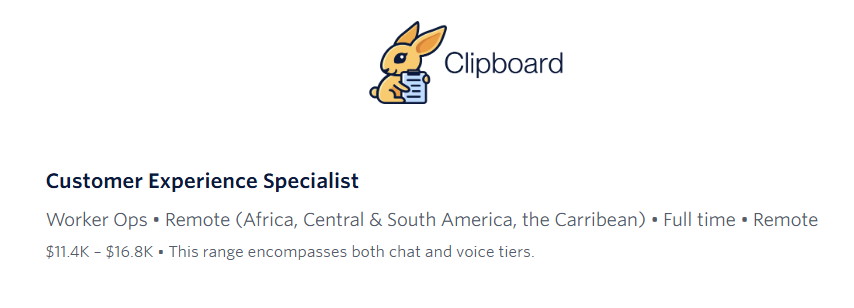
Click here to see their current job openings.
2. Brafton
Brafton is a content marketing agency that welcomes talent from across the world to help bring brands to life.
They also mention the Caribbean on their career page.
However, only 2 Caribbean locations are mentioned in their location filter: “Bridgetown” and “Jamaica Remote.”
For example:
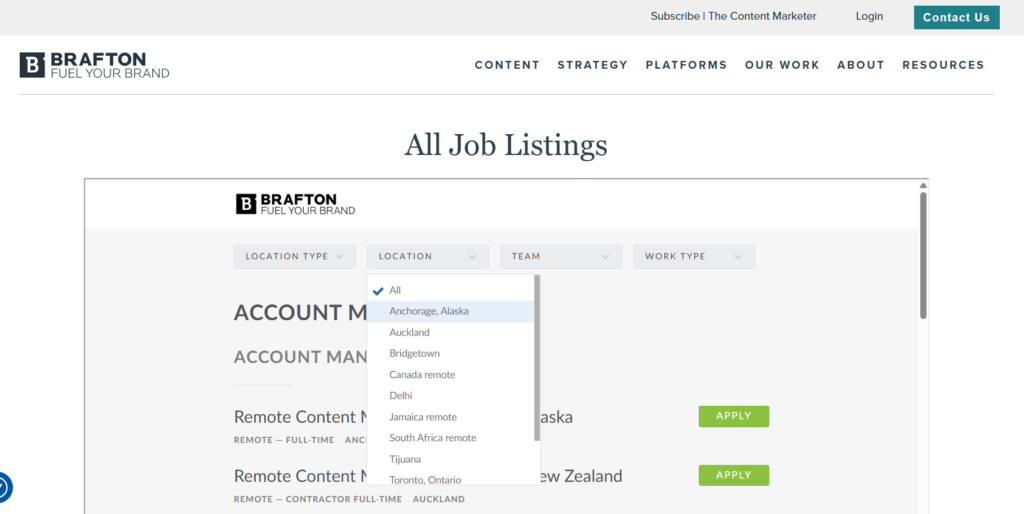
But if you’re not from Barbados or Jamaica, don’t let that discourage you.
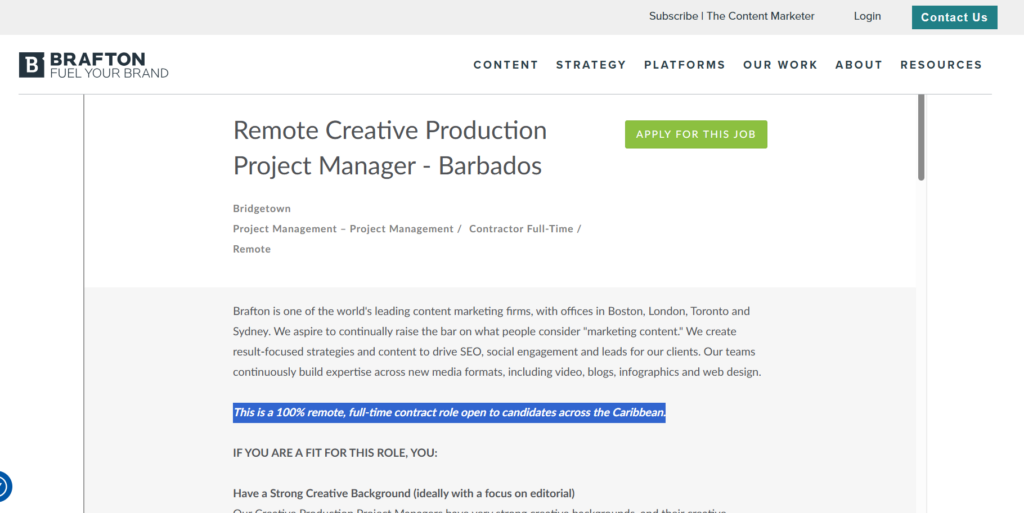
Because if you click on any of the roles, you’ll see the following message in the job ad: “This is a 100% remote, full-time contract role open to candidates across the Caribbean.”
For example, at first glance, this role seems to be targeting only Barbadians.
And this one, only Jamaicans.
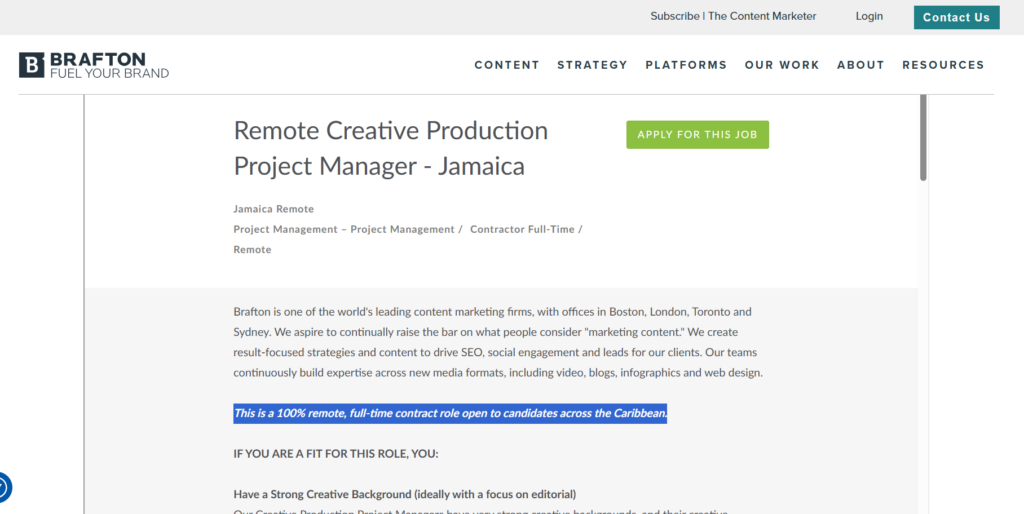
So, as you can see, the job ads, although naming an island in the job title, mention that the role is also open to candidates from other Caribbean islands.
Click here to see the open positions at Brafton if this company interests you.
3. BairesDev
Now, sometimes, where a company hires from may not be obvious. You may just see “work from anywhere” or “global,” for instance, on their career page.
Sometimes, you may have to investigate or research a bit more.
And BairesDev is one such company. On their career page, you won’t see the Caribbean mentioned.
But if you poke around their site or their LinkedIn profile, then things get a bit clearer.
For instance, here’s an article on their blog about Jamaica being the tech hub of the Caribbean.
Or take a look at their LinkedIn profile overview, where they mention “Drawing on the top 1% of tech talent from the Americas and the Caribbean.”
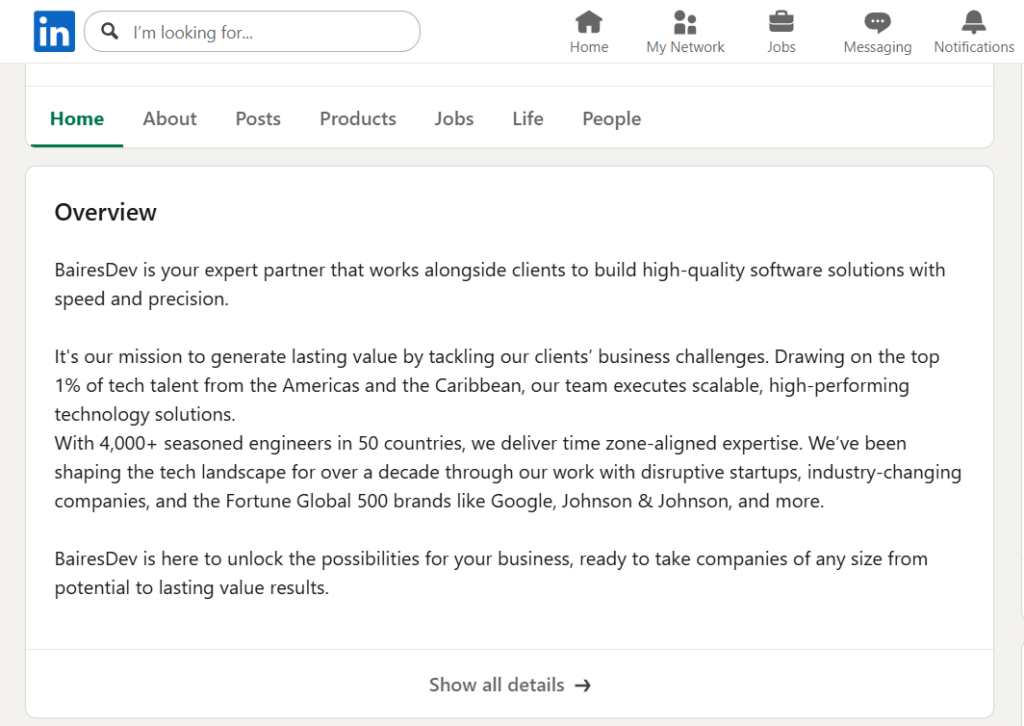
So, their LinkedIn overview clearly indicates that BairesDev hires from the Caribbean. This just proves that you need to do some digging.
BairesDev provides software solutions in over 130 industries and “helps companies build, ship, and maintain complex software faster.”
They have a mixture of roles that include data entry, client success, HR, tech, and much more.
Their payout methods include wire transfer and Payoneer.
Click here to explore their job opportunities.
Truly Global companies (Hire from Almost Anywhere)
These companies are known to either:
1. Interview Caribbean applicants.
2. Have indicated that they hire from the Caribbean (either through hiring events, or after contacting their recruitment department, or an employee).
3. Have information on their career page that suggests Caribbean nationals can apply.
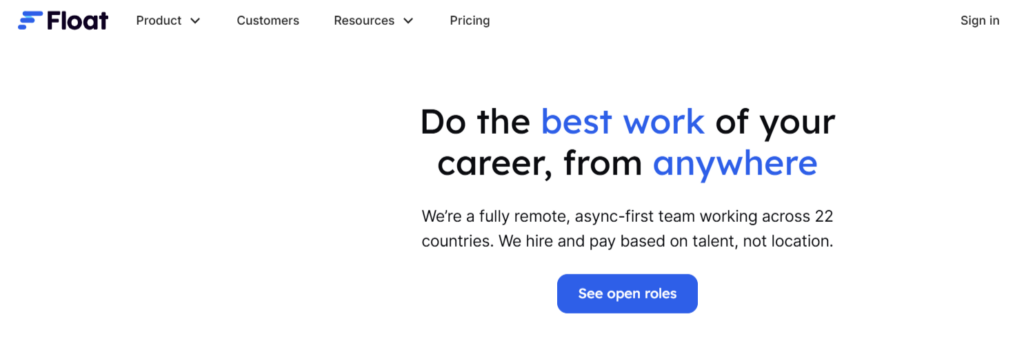
For example, take a look at how Float captures hiring globally. The information clearly suggests that, as a Caribbean citizen, you can apply for a suitable role.
The companies below have posted jobs across various industries and skill levels and provide full-time, part-time, contract, or freelance positions.
(Based on the time you read this post, some may not have jobs or jobs in the region.)
1. 20four7VA
20four7VA offers virtual assistant services to companies mainly in the US and the UK. They are known to have multiple junior and senior full-time and part-time roles.
In addition to roles with various skill levels, they also have bilingual roles requiring fluency in English and Spanish.
2. Achieve Test Prep
Achieve Test Prep helps students, particularly nursing and healthcare students, test out college courses.
They offer fully remote full-time and part-time jobs that are primarily for non-US candidates.
3. Automattic
If you’d love to work for a company that pays the same salary no matter where you’re located, then Automattic is the company for you.
They’re the company behind WordPress and WooCommerce, and currently employ over 1,500 employees located in different parts of the world.
4. Canonical
Canonical provides open-source software and operating systems to the global enterprise and technology markets.
They typically have multiple open roles hiring across various departments like engineering, marketing, sales, and more.
Caribbean candidates can search for jobs classified under “AMER.”
5. Chainlink Labs
Chainlink Labs builds technology that connects traditional financial institutions to the world of blockchain and digital assets.
All their roles are global and remote (however, you’ll see some with locations), but they prefer candidates to overlap with some working hours with Eastern Standard Time (EST). And this is a time zone some of the Caribbean islands fall under.
6. Coalition Technologies
Headquartered in Los Angeles, Coalition Technologies specializes in SEO, PPC, email marketing, social media marketing, and web design & development.
Not only do they hire people from all over the world, but they also allow working from anywhere. So, if you’re hired from St. Lucia but want to travel to St. Vincent for 2 weeks? No problem, just continue working from there as long as you’re legally allowed to.
7. Deel
Deel is an HR and payroll platform that enables companies to hire and manage global employees and independent contractors in over 150 countries.
They also allow working from anywhere.
The jobs for which Caribbean candidates can apply are classified under “Americas.”
Note: Sometimes you won’t see this classification if jobs aren’t available, but keep tabs on Deel, as they’ve been known to advertise jobs for the Americas.
8. Empire Flippers
Empire Flippers buys and sells online businesses and websites.
They’ve advertised positions across various departments, and the location requirements in their job description are normally very clear, so there’s no second-guessing who can apply.
9. Filmless
Filmless is an animation and video production company.
They have global freelance opportunities that are typically in the video production space.
10. Fingerprint
Fingerprint helps businesses detect and prevent online fraud.
They hire people from across the globe and have jobs across departments like customer success, finance, people, and more.
11. Float
Float provides software that enables organizations to plan projects and schedule resources profitably.
They hire globally and pay based on talent, not location. Plus, you can work whatever time that’s best for you, which allows for greater flexibility and work-life balance.
12. JatApp
JatApp creates high-tech products that aim to make life easier for people to live, work, and grow.
They hire worldwide across various departments and have advertised for both junior and senior roles.
13. Jibble
Headquartered in London, Jibble provides time tracking software for teams.
They have flexible working hours, and you can work from wherever you’re happiest and most productive.
14. Nethermind
Nethermind is a blockchain research and software engineering company.
They hire globally and also have internship opportunities.
15. Paymentology
Paymentology is a card issuing and processing platform supporting a variety of card programs, including debit, prepaid, credit, physical, and digital cards.
They hire globally, and in fact, one of my St. Lucian readers was able to interview with them.
16. Remote
Remote is a global HR platform that enables companies to hire, manage, and pay teams everywhere.
They often have multiple full-time roles across varying departments and skill levels.
In addition to classifying their jobs by countries or regions, you may also see “Amer” or “Global.” Additionally, the job description will always mention the location if you click on a job that doesn’t have a location attached to it.
17. SafetyWing
SafetyWing provides travel and medical insurance to digital nomads, remote workers, and long-term travelers.
They offer full-time, part-time, freelance positions, and internships. They’ve also posted opportunities (which include funding your trip) for creators with digital nomad experience to explore digital nomad destinations.
18. Shopify
Shopify is an all-in-one platform for individuals and businesses to create, customize, and manage online stores.
They normally have multiple job openings, and Caribbean applicants can expect to find jobs they can apply for, classified under “Americas.”
19. Unload My Home
Unload My Home simplifies the home-buying process, allowing homeowners to sell their homes with confidence.
In the past, they’ve had global opportunities for worldwide sales positions, so keep an eye on them.
20. Uscreen
Uscreen allows experts, coaches, and creators to turn their videos into a subscription business.
In the past, they’ve had different positions across various departments. While you can be in any time zone, they require some overlap with their headquarters in Washington, DC.
21. VRChat
If you’re passionate about virtual worlds, online communities, and the future of human interaction, then VRChat might be for you.
VRChat is an online virtual world platform where people interact with others through custom 3D avatars and worlds.
Their jobs are typically classified as “Remote-Anywhere,” which tells you that anyone worldwide can apply.
22. Xapo Bank
With its headquarters in Gibraltar, Xapo Bank is a members-only private bank for bitcoin holders.
They have multiple openings open to candidates around the world.
Note: You may see “Remote-Gibraltar” under the jobs on their career page. However, the location would be specified in the job ad, and more often, it indicates that the job is remote, and you can work from anywhere.
To wrap up this section
As companies expand their talent beyond borders, the number of companies hiring Caribbean nationals is sure to increase.
So, you can check out my mega list of companies hiring globally or companies hiring now, so you don’t miss out on any other good leads. Apply what you’ve learned about how to identify the jobs that hire Caribbean nationals.
Now that you’ve seen the companies, let’s look at another path to online income: platforms where you can start earning, build experience, and open the door to even more remote opportunities.
Best Platforms Offering Remote Jobs for Caribbean Workers
These platforms have been known to do either of the following:
1. Accept Caribbean nationals.
2. Have mentioned the Caribbean regions (e.g., LAC) in their openings.
3. Have information on their site that suggests Caribbean nationals can apply.
4. Have payout methods (such as PayPal, Payoneer, or bank transfer) that are supported by the Caribbean.
Registering on these platforms doesn’t mean that you’ll get jobs or gigs automatically. And some even require an interview process.
Signing up for multiple platforms increases your chances of earning.
Let’s look at some of the platforms you can use to start earning from home, even if you’re just getting started.
Tech
Do you have a background in tech or building one? Global companies are looking for tech talent. Here is one worth exploring.
Andela
If you love research, developing, and testing emerging technology and are looking for a full-time or part-time role, then you might want to consider registering with Andela.
Andela “connects global technologists with the opportunities shaping the AI era.”
They hire from over 135 countries, and their approved list of regions they hire from includes various Caribbean islands.
(Cuba is on their prohibited region list.)
Payout Methods
- Payoneer
Apply to Andela.
If tech isn’t your thing, don’t worry, there are plenty of beginner-friendly options too.
Customer Support
You could be helping customers over the phone or only via email and chat.
And this company has posted a mix of phone and non-phone customer support gigs.
ModSquad
ModSquad provides customer support and content moderation for brands worldwide.
They hire freelancers who can pick their projects and set their schedule. So, if you’re looking for flexible work from home jobs, then you might want to consider applying to ModSquad.
They hire people from over 90 countries. But the site doesn’t specifically list the countries they hire from.
However, as of this post’s publish date, the jobs Caribbean nationals could apply for were classified under locations captured as:
- “EST Remote”
- “Global Remote”
- “JAM Remote”
- “LAC English”
Payout Methods
- PayPal
Apply to ModSquad.
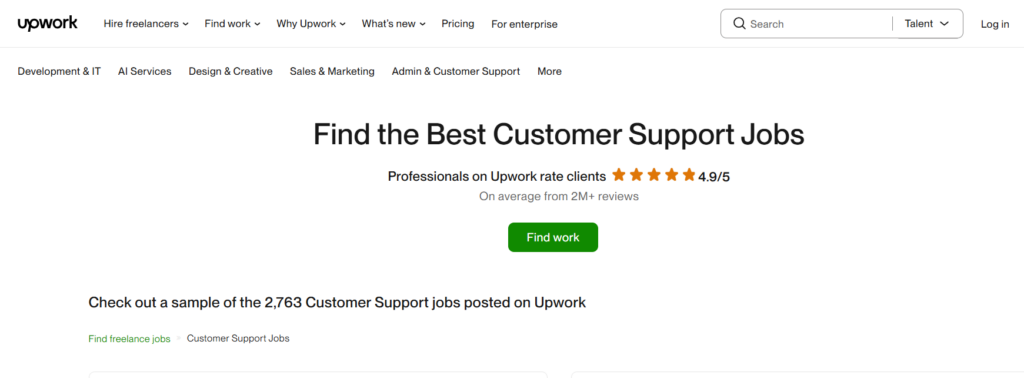
Additionally, some freelance platforms like Upwork have many freelance customer support roles you can apply for.
If you’re looking for something even simpler or more flexible, micro jobs can be an easy way to start earning online.
Online Micro Jobs
Micro jobs are low-effort, no-experience jobs.
Often referred to as “beer money.” Pocket change you earn online to fund perhaps your snack addiction, a night out, or to buy your Piton, Red Stripe, or Carib beer.
Here are some micro job platforms you can register on.
Amazon Mechanical Turk
Amazon Mechanical Turk is a crowdsourcing marketplace. And you could be doing simple tasks like the following:
- Transcription
- Surveys
- Data entry and more
It’s one of the first online gigs I’ve ever signed up for as a Caribbean national, and I was able to earn over US $100. (Took a long time, though.)
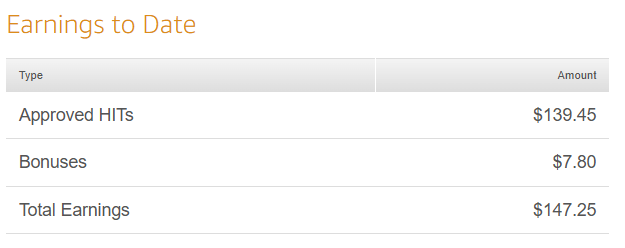
Now jobs for non-US people are very limited. (That’s why it took me a long time to earn that amount. But I wasn’t using the platform frequently, so I probably could have earned much more.)
Also, you won’t be paid in cash, but you can transfer your earnings to an Amazon.com gift card.
Payout Methods
- Amazon gift card
Apply to Amazon Mechanical Turk.
TaskVerse
TaskVerse is another platform where you could be working on simple tasks such as:
- Content moderation
- Transcription
- Annotating images and more
You simply sign up and complete your profile.
Tasks may not always be available to you, but if your profile matches available tasks, you’ll receive instructions on what to do next.
Payout Methods
- PayPal
Apply to TaskVerse.
Once you’re comfortable with basic online tasks, you can explore higher-paying opportunities like AI training jobs.
AI Training Jobs
AI still needs humans to get it right, and companies pay freelancers to help.
Projects require different skill sets and experience, so there’s a possibility some will be a fit for you.
Here are some AI training sites worth checking out.
Crowdgen by Appen
Formerly known as Appen, it’s a platform with over 1 million remote members from 200+ countries.
No experience is required. And the good thing about Crowdgen is that their opportunities aren’t limited to short tasks.
They also offer long-term projects and part-time roles.
Some of the projects you may be working on include:
- Evaluating text-to-speech audio clips
- Search evaluation, classification, and more
- Evaluating search results
- Voice transcription
Payout Methods
- PayPal
- Payoneer
Apply to Crowdgen.
Neevo
A crowdsourcing platform where you’ll be performing microtasks such as text, audio, video, and image labeling or validation to help train AI.
It’s beginner-friendly, and you don’t need a degree to register.
You’d be required to take qualification tests so that you can be matched with jobs that match your skill set. If you fail, it doesn’t prevent you from accessing other jobs.
Payout Methods
- PayPal
Apply to Neevo.
RWS
No matter what your skill set is or whether you’re a student, an entry-level or professional candidate, or just starting your career, RWS welcomes you to register on its platform.
Some of the jobs you could be working on include ad evaluations, data collection, and annotations, to name a few.
A resume would be required to apply for jobs.
Apart from working on tasks, you’ll also have the opportunity to train and develop your skills regularly. The more skills you acquire, the more jobs you’ll get to work on.
Payout Methods
- PayPal
- Bank transfer
Apply to RWS.
Stellar.ai
Stellar.ai welcomes people with diverse skill sets and knowledge to register on their platform.
They provide comprehensive training, so don’t worry if you don’t have AI training experience.
Some of the projects may require advanced knowledge (such as software engineering) and degrees. But there are also generalist roles, which pay US $25/hr.
Jobs include AI prompt and challenge creation, coding task generation, and expert rubrics.
Payout Methods
- PayPal
Apply to Stellar.ai
There are other AI training companies like Mercor that advertise global hiring. And some Caribbean nationals can expect to get paid for jobs because they live in a Stripe-supported country.
However, most of the projects are for people who live in the US, Canada, the UK, and Europe. And even if you get accepted on the platform, it doesn’t mean that you’ll get matched to jobs.
While Mercor continues to post a variety of projects, you never know if or when projects will be available to you. So, for now, it can be considered an unreliable side hustle for Caribbean nationals.
You can read my post on “Is Mercor Legit? (For Freelancers Worldwide in 2026)” to help you decide if you should apply.
Read my guide on “What Beginners Should Know About Remote Freelance AI Trainer Jobs” to help you determine if this type of online side hustle is for you.
Another simple way to earn online without needing advanced skills is through usability testing.
Usability Testing Platforms
Companies pay to know if their app or website actually works the way users expect, and that’s where you come in.
You sign up, share your feedback via surveys or live recordings, and get paid.
Here are some platforms to check out.
Enroll App
The tests are quick (in most cases, less than a minute), simple, and can be done on mobile, desktop, and tablet.
Tests could be from universities, financial institutions, and SaaS (Software as a Service) companies, to name a few.
One of my St. Lucian subscribers was able to register and receive tests; in fact, they were coming so frequently that he was complaining a bit. (Can you imagine that, complaining?)
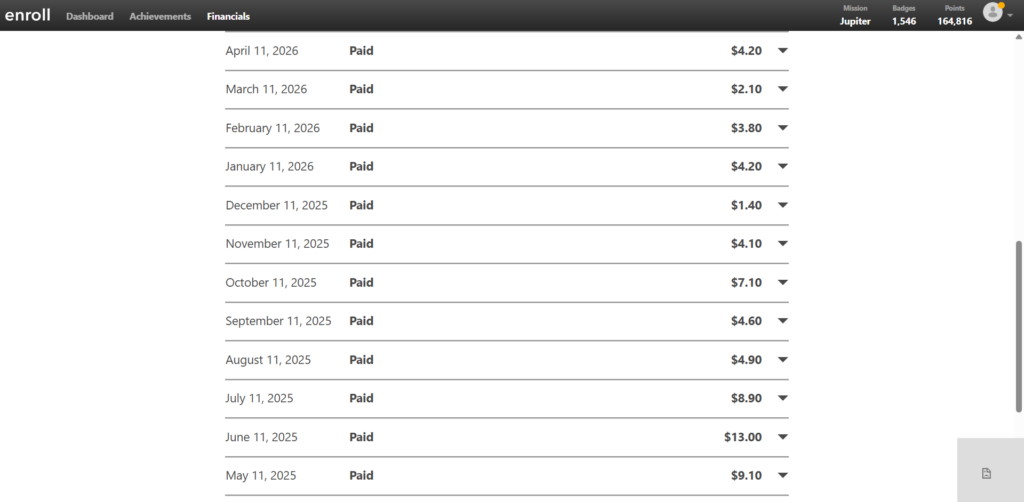
I’ve been using the platform myself since 2019, and from my experience, tests can pay from US $0.10 to a little under US $5. (Majority pay around US $0.20, and they take less than a minute to complete.)
Most times, I don’t get to take the tests on time, and they become unavailable. That has affected my monthly earnings, so some months I’ve earned a little over US $1 or over US $10.
Here are some of my recent earnings.
So, if you’re looking for an easy and quick way to make some income (even while you watch TV), then try out Enroll.
Oh, and once you reach the $1 threshold, you get paid.
Payout Methods
- PayPal
Apply to Enroll.
PlaybookUX
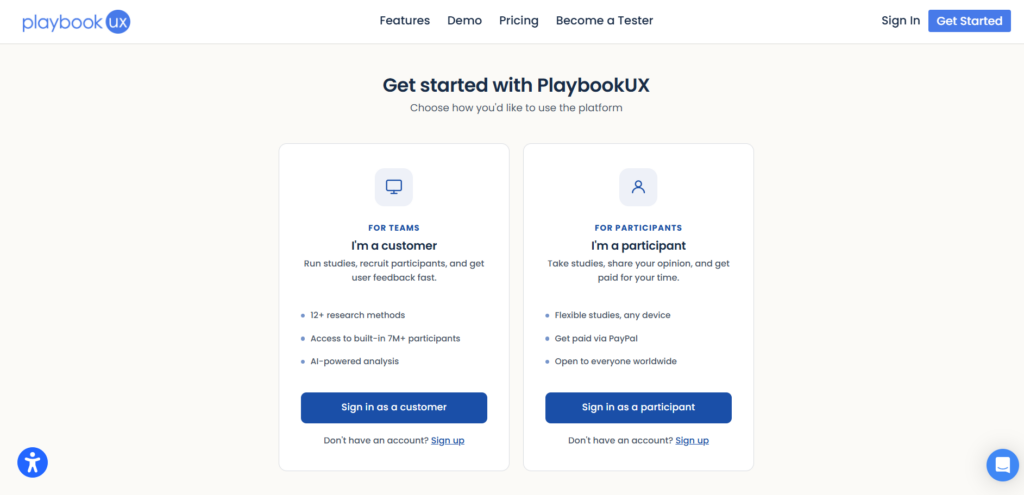
PlaybookUX works with some of the world’s biggest brands that are looking for feedback on their new products.
And they hire worldwide, as you can see here:
Tests can be completed on mobile, tablet, or desktop.
Before you can participate, you’d be required to take a practice test. Once your test is approved, you can browse the available tests that match your profile.
The types of tests you can participate in include:
1. Unmoderated studies – You’ll be speaking out loud.
2. Moderated live conversations – You’ll be speaking to a researcher one-on-one at a scheduled time.
3. Card sort – Sorting cards into groups that make sense to you.
4. Tree test – Tasks about finding content on a website.
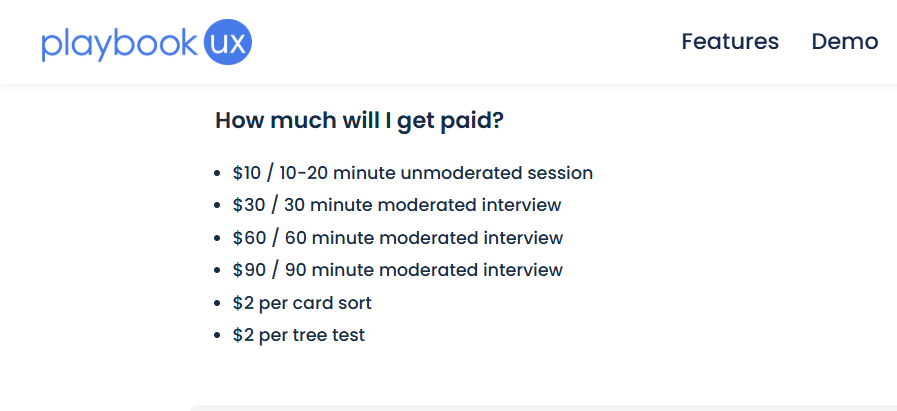
Here’s how much you’ll be paid for each type of study.
Payout Methods
- PayPal
Apply to PlaybookUX.
If you enjoy teaching or sharing knowledge, there’s also an opportunity to earn through online tutoring.
Tutoring
Whether you want to teach English (or other languages), school or university subjects, or hobbies, you can earn income online by tutoring kids or adults.
Here are some companies that you can sign up for.
NativeCamp
NativeCamp is one of the largest online English schools in Japan.
As a tutor, you’d be helping Japanese students improve their English. And you get to choose your preferred working hours.
You’ll be provided with all course material and textbooks, so there’s no need to prepare or buy them.
You don’t need any teaching certificates or experience to apply. However, there are some basic requirements you need to meet:
1. You must be at least 18 years old.
2. You must have excellent English skills (pronunciation, grammar, vocabulary, etc).
3. You must pass the English Proficiency Test, with an average score of at least 80%.
4. You must have a headset or earphones.
Payout Methods
They don’t list their payout methods. However, according to the site, once you’re hired, you’ll be informed about the payment method depending on your country.
Apply to NativeCamp.
Preply
With Preply, you get to set your rates and teach anytime, anywhere.
You don’t need any specific certification or teaching experience to register on their platform.
You basically just need to have strong communication skills, enjoy sharing knowledge, and be willing to provide a personalized experience to international students.
Wondering what kind of subjects you can teach?
With over 100 subjects on Preply, you can teach about different hobbies, art, languages, or school and university subjects.
Payout Methods
- PayPal
- Payoneer
Apply to Preply.
And if you want more control over your income and the type of work you do, freelance platforms are another option to explore.
Freelance Platforms
To get started on freelance platforms, you build a profile, showing off your skills and work experience.
You have the option to either apply for jobs or receive contact from a company or individual seeking workers.
Here are some platforms you can sign up for.
Fiverr
What started as a $5 per task format has grown to include services that can be priced in the hundreds.
Fiverr has over 700 categories. And you’ll be sure to find a suitable category where you can package your services or gig to sell.
Whether you offer professional services or something quirky, you can price your services at different selling points.
But, instead of sending out proposals to clients, you’d be contacted by clients who come across your compelling gig or service.
Payout Methods
- PayPal
- Payoneer
- Payoneer revenue card
- Bank transfer (via Payoneer)
Apply to Fiverr.
Freelancer
Freelancer is a large freelance platform with a global talent network.
With over 2,700 different categories, you’d be sure to find one that fits your skills.
After you’ve registered on the platform, you can apply via project bidding or contests.
After the job is completed and the customer is satisfied, you’ll be paid.
Payout Methods
- PayPal
- Payoneer
- Wire transfer
Apply to Freelancer.
PeoplePerHour
PeoplePerHour is a UK-based platform with users in over 100 countries.
You’ll need to apply to join the freelance community, and if approved, you’ll get access to projects posted by international clients.
You’ll be matched to suitable projects after you’ve built your profile.
Payout Methods
- PayPal
- Payoneer
- Bank transfer
Apply to PeoplePerHour.
Upwork
Upwork is one of the largest freelance platforms for freelancers with different skill levels and experiences.
You’ll find both short-term and long-term jobs across many industries posted there.
So, whether you have experience in customer support or you’re a writer, you can be sure to find a job you can apply for.
The job will include the country the freelancer should be from, or indicate “worldwide.” So, you’ll know exactly what jobs you can apply for.
You may be competing against many applicants for a job. So, writing a strong proposal is key if you want the job.
Payout Methods
- PayPal
- Payoneer
- Bank transfer
Apply to Upwork.
Common Mistakes to Avoid
Now that you know where to find these opportunities, let’s make sure you don’t lose them by making a few common (but avoidable) mistakes.
Applying before setting up payments
Imagine applying for a job or project, getting accepted, then getting stuck when it’s time to get paid.
PayPal is one of the most popular payout methods used across online platforms. And the good news is that you can receive PayPal funds in the Caribbean. But before you rely on it, confirm that your local bank supports incoming PayPal transfers (that’s in case you don’t want to leave your funds in PayPal). Contact your bank first to find out exactly what you’ll need to receive funds.
A few other things to keep in mind:
1. Some platforms require that your PayPal email address match the name or email you used to register. To avoid any challenges, consider using an email account that includes your legal name.
2. Most platforms will not transfer funds to someone else’s account on your behalf. So, open a bank account or a payment processor account (e.g., PayPal, Payoneer, or Stripe) in your name before you start applying.
Ignoring location filters
If you’re thinking, “Let me apply anyway, maybe they’ll make an exception,” don’t.
If a job says “US only” or leaves out your region, applying is a waste of time and energy.
Instead, focus on jobs that accept worldwide applicants, especially those that specifically mention the Caribbean, the Americas, or a time zone your island falls under.
Tip: Use a job application tracker or create a simple spreadsheet to keep track of the companies and platforms that hire Caribbean nationals. Subscribe to job alerts where you can so you’re not starting from scratch every time you search.
Not tailoring your resume
Remote job applications work differently from what most of us in the Caribbean are used to.
You can’t just send a generic resume and hope for the best, especially when you’re competing against applicants from all over the world.
Getting past the ATS
Many companies use the Applicant Tracking System (ATS) to filter applications before a human ever sees them.
To get through it, use the exact language in the job description. If the posting says, “asynchronous communication,” use that phrase in your resume, not just “online communication.”
A small difference in wording can get your application filtered out before anyone sees it. So, tailor your resume to the job to stand a better chance.
Not showing you can work remotely
The Caribbean isn’t widely known for remote work. But you’ll want to show that you can work remotely.
You can do that by:
1. Listing the tools you use (e.g., Slack, Trello, Zoom, Microsoft Teams, Notion, or whatever’s relevant).
2. Showing soft skills with context, not just listing them. For example, instead of writing “independent problem-solving,” say something like, “Identified and resolved a recurring client billing issue independently, without supervisor guidance, by researching the platform’s documentation and implementing a fix that reduced complaints by half.”
3. Mentioning any online courses you’ve completed or are currently taking.
Tip: If you’ve worked remotely before, freelance or otherwise, include it in your resume header: “Remote since (year).” You can read more about how to create a resume for a remote job here.
Not networking
Here’s something some people don’t do: networking on LinkedIn.
I was able to secure an interview by first connecting with someone on LinkedIn who worked at a company I was genuinely interested in.
For Caribbean applicants who may have smaller professional networks, this kind of direct outreach can matter more than the volume of applications you send out.
Here’s a simple approach:
1. Shortlist the companies that genuinely interest you.
2. Learn about them, their mission, their products or services, and their team culture.
3. Follow them and their employees (like those in the department you’re interested in) on LinkedIn and turn on notifications for their posts.
4. Leave meaningful comments on their content, not just “Great post,” but something that shows you actually engaged with what they shared.
5. Once you apply, reach out to your connection at the company, someone in HR, or the relevant department, and let them know you’ve applied.
It takes more effort than clicking “apply,” but it puts a face to your name before your resume is even opened.
The bottom line
Getting online opportunities or remote jobs for Caribbean nationals isn’t about finding opportunities; you know it’s possible.
It’s about approaching them the right way.
Avoid these mistakes and use the tips so you won’t waste your time and energy.
Before we wrap up, let’s quickly answer some of the most common questions Caribbean job seekers may have about remote work and earning online.
FAQs for Remote Jobs for Caribbean Nationals
Can I work remotely for an international company if I’m from the Caribbean?
Yes, you can work remotely for an international company if you’re from the Caribbean. Many companies hire worldwide, especially for contractor or freelance roles. The key is to find those labeled as “worldwide,” “global,” “international,” “remote anywhere,” or “Caribbean,” for example, and ensure your island supports their payout method.
Can I work remotely for a US company if I’m from the Caribbean?
Yes, but not all US companies hire internationally. Some only hire US residents. Look for roles that mention “international,” “worldwide,” “global,” or “Caribbean,” or mention regions or time zones the Caribbean falls under.
What are the top companies hiring for remote jobs in the Caribbean?
Some top companies include Clipboard Health, 20for7VA, Paymentology, and Deel. Many companies hire based on skills, not location. In this post, we’ve listed specific companies and platforms that Caribbean nationals can apply to.
How to make money from home in the Caribbean?
You can make money from home through freelancing, remote jobs, or online side hustles. Some common options include customer service, tech support, and virtual assistance. If you have no experience, start with beginner-friendly platforms, then build skills to move into high-paying roles.
Do I have to pay taxes if I work remotely for a foreign company?
Yes, you may still need to pay taxes in your country of residence. Many companies may hire you as an independent contractor, and therefore, you’d be responsible for paying your income tax. Check your local laws, speak with a tax professional, or contact your Inland Revenue Department to know what your obligations are.
Your Action Plan
Now that your questions are answered, let’s simplify everything into a clear action plan you can follow.
Your Action Plan: How to Get Remote Jobs for Caribbean Nationals
Feeling overwhelmed? You don’t need to figure out everything at once. Just follow these steps and keep it simple.
1. Set up your payment method first
Ensure you have a way to receive international payments before you consider applying anywhere.
2. Choose ONE beginner-friendly path
Seriously, just pick one. Customer service, tech support, and virtual assistance are all great starting points. Trying to do everything at once usually leads to doing nothing.
3. Use the right platforms
Not every platform accepts Caribbean citizens, so stick to the ones that do (you’ve got the list). No point wasting energy on platforms that will reject you.
4. Work smarter with your job search
Skip anything labeled “US only,” for example; that’s a dead end. Instead, filter for roles that say “worldwide” or “global.” Those are your green lights.
5. Show you’re remote-ready
In your application, make it clear you know how to communicate, manage your time, and show up online. It sounds basic, but it goes a long way.
If you follow these steps, you’ll already be ahead of most people trying to break into remote work. Now let’s tie it all together.
Conclusion for Remote Jobs for Caribbean Nationals
You’ve made it this far, and you see there are online jobs for people in the Caribbean.
But getting remote work is not about luck.
It’s not about being in the “right” country, and it’s definitely not about applying to hundreds of jobs and hoping one sticks.
It’s about strategy.
It’s about knowing:
- Where to look (and not waste your time)
- How to spot the jobs that actually accept Caribbean candidates
- How to set yourself up so you can get paid
- How to network
Once you know these things, they become less confusing and more doable.
The truth is, there are people from St. Lucia, Barbados, Jamaica, and across the Caribbean already working remotely and earning online.
And you can do the same.
Start small. Stay consistent. Focus on the right opportunities.
Don’t count yourself out before you even begin.
Related Articles
Is Working Remotely Right for You?
International Remote Job Leads (Hiring Now)